When sex is no longer under your control, there is a way out
Psychological and medical treatment of compulsive sexual behaviour (so-called sex addiction) in Madrid. Without prejudice, with professional support and in a confidential manner.
Initial assessment in a safe and respectful environment. Individual sessions.
The problem is never your sexuality—not who you're with or how often. The problem arises when you lose control about impulses you no longer choose, when you try to stop them but can't, and when that makes you feel discomfort or damages your life. That has a name, has an explanation and has a treatment. It is not a personal flaw nor a lack of willpower: it is a health problem that can be addressed in treatment.
For those who bear this burden in silence and with shame, and also for partners who don't know how to help: asking for help isn't giving up—it's a new beginning.
Would you prefer that we call you?
Leave us your name and phone number. We will call you to provide guidance.
Regaining Control, Step by Step
We work from a place of understanding and without judgement, using cognitive-behavioural therapy, motivational interviewing, emotional regulation and an approach to shame and self-esteem. When helpful, we include the partner and sexual health. All with medical follow-up when appropriate and always on an individualised basis. We work with our own model, the Unified Transdiagnostic Model (MUT), which incorporates scientifically-backed therapies and simultaneously addresses the issues that often accompany the problem (anxiety, low mood, self-esteem).
First Confidential Call
You tell us what is happening to you at your own pace, without having to give uncomfortable explanations. We listen and advise you on the next step.
Clinical Assessment
A healthcare professional assesses what lies behind it: behaviour pattern, distress, anxiety, mood, personal history and how it is affecting your life. From there, an individualised treatment plan is established.
Therapy and Regulation
We work on impulses and triggers with CBT and motivational interviewing, we learn to regulate emotions and we address the shame and guilt that frequently accompany and maintain the problem.
Consolidate progress and prevent relapses
We consolidate what has been learnt, we work on intimacy and affected relationships and we prepare tools to sustain the changes in the long term, with support for the partner when indicated.
Understanding Compulsive Sexual Behavior
People often talk about “sex addiction,” but technically it is not listed as an addiction in diagnostic manuals. The ICD-11 includes the compulsive sexual behavior disorder, classified as an impulse-control disorder, not as an addiction. What defines the problem isn't how much sex you have, your sexual orientation, or your sexual practices: it's the loss of control about intense, repeated urges that persist over time and cause you to discomfort or deterioration in your life.
When Does It Become a Problem? +
- You try to stop or slow down, but you can't.
- You're devoting more and more time and energy to it, taking them away from other areas.
- You keep going despite the consequences for your health, your job, or your relationships.
- Afterward, there is a feeling of emptiness, guilt, or distress.
If this sounds like you, it's not a matter of willpower: it's something that can be treated.
What usually goes along with it +
- Anxiety, insomnia, and thoughts you can't stop.
- Low mood or depression.
- Low self-esteem and a deep sense of shame.
- Unresolved traumatic experiences.
- Compulsive use of pornography or other repetitive behaviours that are difficult to control.
Addressing the underlying issues is part of the treatment, not an afterthought.
How It Affects Your Life and Your Relationships +
The Treatment +
- Stabilization: understand the pattern, reduce harmful behavior, and alleviate immediate anxiety and distress.
- In-depth work: CBT and motivational interviewing, emotional regulation, addressing shame and self-esteem, and sexual health.
We include work with the partner or family when indicated and medical follow-up or treatment of dual pathology under clinical criteria. The aim is not to repress your sexuality, but to support you so that you regain control over it.
This treatment is part of our non-substance addictions in Madrid, where we also discussed gambling addiction, video game addiction, compulsive shopping, workaholism and emotional dependence. You can learn more about our addiction treatment center in Madrid, the detox center and the outpatient treatment.
How much does it cost? +
How often are the sessions? +
This information is for guidance only and does not replace a professional assessment. The criterion for a problem is distress and loss of control, never morality, religion or sexual orientation. If you notice impulses or behaviours that could harm another person or be illegal, seeking professional help as soon as possible is an act of responsibility and the first step towards protecting yourself and others.

A medical clinic that's close by and confidential
We are a registered team with experience in compulsive sexual behaviour and dual pathology in Madrid. We work without prejudice and with the utmost respect: we listen to your distress, we do not judge it morally. Close, individualised and confidential care.
Personalized and Confidential Care
Personalized care protected by professional confidentiality. You decide who to share it with.
Therapy Tailored to Your Life
Outpatient treatment that fits into your daily routine, with a plan tailored just for you.
A close and qualified team
We encourage therapeutic work from the very first moment, with a supportive healthcare team with specific training in addictions.
Clear terms from the outset
Personalised treatment plans, tailored to each person and their situation.
We'll take this step with you
We want to listen to you and support you throughout the process. A relapse is not the end: it can be part of the process, and we know how to support you through it.
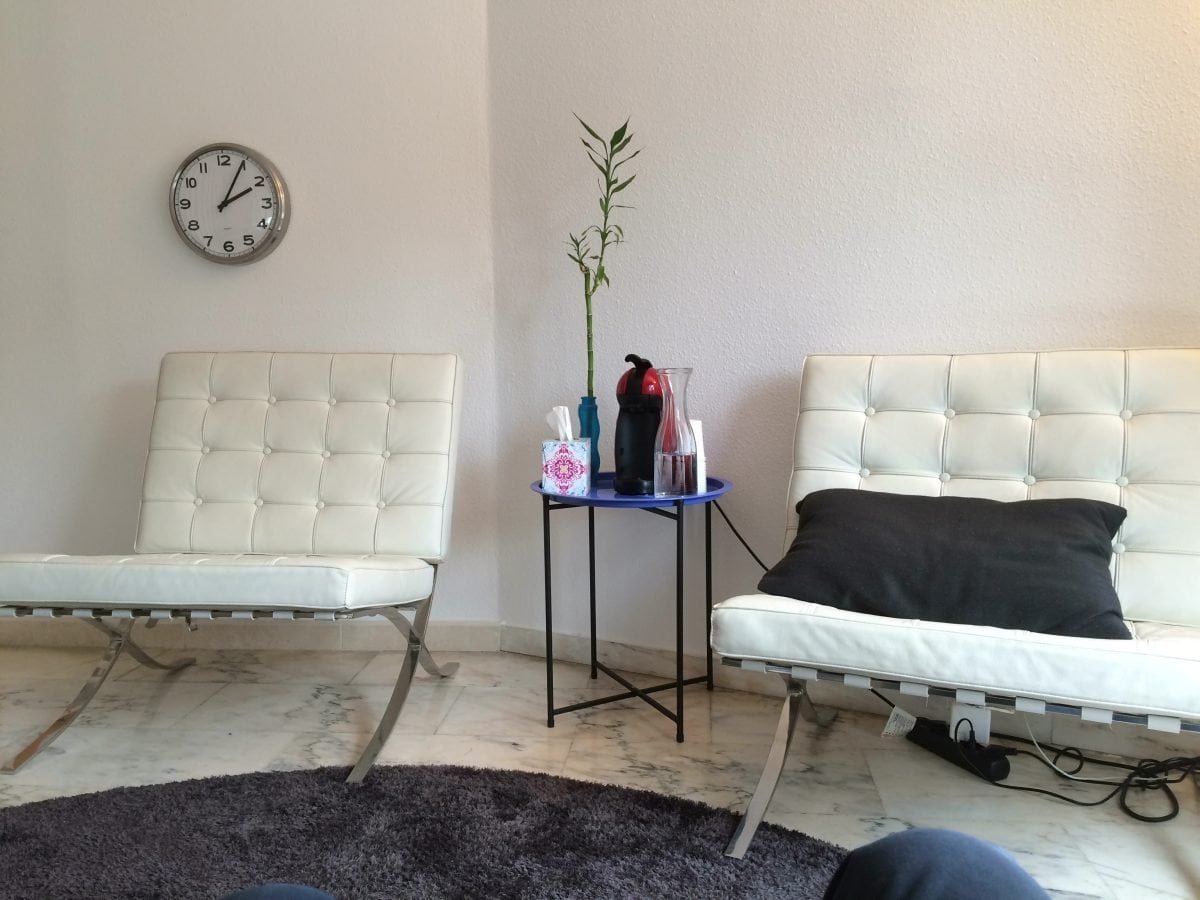
A quiet and unassuming spot in the heart of Madrid.
Regaining control is possible. With the right support, shame can stop occupying the centre, and the capacity to decide can be recovered.
Frequently Asked Questions
Is this really an addiction? +
Are you going to judge me for what's happening to me? +
Is watching a lot of pornography an addiction? +
Is this confidential? +
Do you treat the partner as well? +
What happens on a first appointment? +
Take the first step today
A confidential phone call is all it takes to get started. We're here to help you or your family member.