When the game it's no longer just a game
Treatment for video game addiction in Madrid, for you or for your son or daughter, with professional support and without judgement.
Initial assessment in a safe and respectful environment. Individual sessions.

The problem was never the video game. Video games entertain, connect and motivate millions of people without this being a problem. What is concerning is something else: when playing take control, it takes the place of sleep, school, friends, and life outside the screen, and yet people keep playing despite the consequences. When that goes on for a long time, it stops being a pastime and starts to hurt. It is a treatable problem with professional help, and each process is different.
And if a worried mother or father is reading this: you are not alone and this is not about blaming anyone.
Would you prefer that we call you?
Leave us your name and phone number. We will call you during opening hours to advise you.
Regaining control over video games, step by step
We work with cognitive-behavioural therapy, motivational interviewing, sleep hygiene and realistic usage guidelines. We also support the family in maintaining agreed limits and help reactivate reinforcers and hobbies away from the screen. All within an individualised plan, with medical follow-up when needed, within the Unified Transdiagnostic Model (MUT), on an outpatient basis.
First Confidential Call
We listen to what is happening, without judgement and without labelling. A first assessment to understand the case and decide the next step together.
Clinical Assessment
We assess not only the hours spent gaming, but what function the video game serves: escapism, socialising, achievement. We explore sleep, studies or work, mood and possible underlying conditions such as anxiety, depression or ADHD.
Individualized Treatment Plan
We define achievable goals: restoring sleep and routines, agreeing on a balanced use of video games, reactivating relationships and hobbies, and working on what sustains the problem. With the family when it concerns a minor.
Monitoring and Maintenance
We accompany progress, work on relapse prevention and adjust guidelines. The goal is not a battle against the screen, but a life in which video games occupy the place they should.
Understanding Video Game Addiction
"Gaming disorder" is recognised by the World Health Organization in the ICD-11. It is worth qualifying: playing for many hours is not, in itself, a disorder. What defines it is sustained impairment over time, not the amount of play. Understanding this properly avoids both minimising the problem and over-pathologising a healthy hobby.
When Video Games Become a Problem +
- Loss of control about when, how much, and in what situations it is played.
- Game Priority above other activities, obligations, and relationships.
- Continuity Despite the Consequences obvious negatives, with no way to stop them.
If you recognise this in yourself or in your son or daughter, a professional assessment can help clarify the situation.
What Often Accompanies It (Dual Diagnosis) +
Impact on Daily Life +
- Insufficient sleep and night shifts.
- Decline in performance or absenteeism from school or work.
- Isolation and less social life away from the screen.
- Irritability or sadness at not being able to play.
- Conflicts at home over its use.
- Added risk when gambling-like mechanics appear within the video game, such as paid loot boxes (loot boxes). If what is involved is money betting, the clinical picture is different and we address it in gambling addiction.
All these difficulties can be addressed in treatment, although each process is different and progresses at its own pace.
The Treatment +
This treatment is part of our non-substance addictions in Madrid, where we also discussed gambling addiction, compulsive sexual behavior, compulsive shopping, workaholism and emotional dependence. You can learn more about our addiction treatment center in Madrid, the detox center and the outpatient treatment.
How much does it cost? +
How often are the sessions? +
This page is for guidance only and does not replace a professional assessment. If this concerns a minor, the family can seek guidance even if the adolescent is not yet willing to take this step.

A medical clinic that's close by and confidential
We are a registered team in Madrid, with experience in problematic technology use, dual pathology and working with families. Close, confidential and non-judgemental care, with a plan designed for each person.
Personalized and Confidential Care
Personalized care protected by professional confidentiality. You decide who to share it with.
Therapy Tailored to Your Life
Outpatient treatment that fits into your daily routine, with a plan tailored just for you.
A close and qualified team
We encourage therapeutic work from the very first moment, with an approachable professional team with specific training in addictions.
Clear treatment plans
Objectives, steps and conditions defined from the outset and adapted to each person and their situation.
We'll take this step with you
We want to listen to you and support you throughout the process. A relapse is not the end: it can be part of the process, and we know how to support you through it.
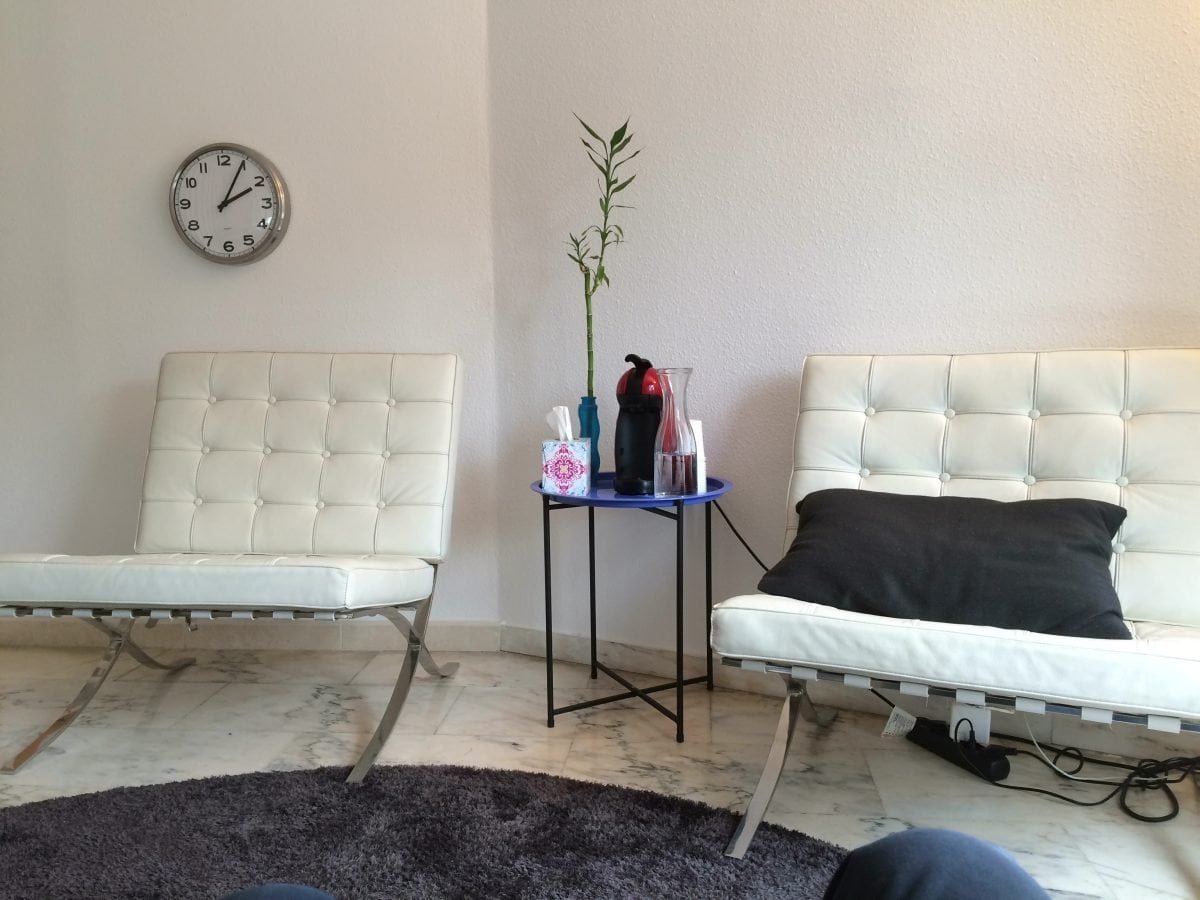
A quiet and unassuming spot in the heart of Madrid.
The therapeutic work is aimed at restoring sleep and routines, resuming studies, and broadening life beyond the screen, so that gaming occupies a more balanced place. Each process is different and progresses at its own pace.
Frequently Asked Questions
My son or daughter plays for many hours, is this addiction? +
Is this confidential? +
Should we take away all his video games? +
How do I set limits without it becoming a constant conflict at home? +
Do you work with children and their families? +
What happens on a first appointment? +
Take the first step today
A confidential phone call is all it takes to get started. We're here to help you or your family member.